Retail media is entering a new phase. Agencies are no longer managing campaigns on one or two platforms, they’re managing 10, sometimes 50+ Retail Media Networks (RMNs) simultaneously for multiple brands.
At the same time, AI-powered AdOps systems are accelerating campaign execution, automating bidding, budget pacing, reporting, and optimization.
But this shift introduces a new concern for agencies: If AI manages the operations, who maintains control?
For agencies running retail media across many retailers, the answer is not avoiding automation, it’s building an AI-first AdOps model designed with governance, transparency, and control at its core. Scaling retail media profitably in 2026 requires more than automation. It requires an operational blueprint that combines high-velocity execution with enterprise-level oversight.
Why Retail Media Agencies Need AI-First AdOps
Retail media is structurally different from traditional digital advertising. Agencies must operate in an environment where:
- Every retailer has different dashboards and ad platforms
- Reporting structures vary widely
- Campaign taxonomies differ across networks
- Access permissions are fragmented
- Budget pacing must be monitored across dozens of systems
Without strong operational infrastructure, agencies end up with:
- Teams logging into dozens of retailer platforms daily
- Manual spreadsheet consolidation
- Inconsistent campaign naming
- Limited visibility into performance across networks
- High risk of human error
When AI is layered onto this fragmented system without governance, the risk multiplies. This is why agencies need an AI-First Retail Media AdOps framework, not just automation.
The goal is simple:
Let AI accelerate execution while maintaining full operational control.
Establishing Control with Account Linking and Permissions
One of the first operational challenges retail media agencies face is access management. When campaigns are running across many retailers and brands, access credentials often become fragmented. Teams may share passwords internally, maintain separate retailer logins for different team members, or rely on dozens of individual account invitations. Over time, this creates security vulnerabilities and operational confusion.
An AI-first AdOps model replaces this fragmented approach with centralized account linking. Instead of accessing each retailer separately, agencies connect their retail media accounts into a unified operational environment. This makes it possible to manage multiple networks and brand accounts within a single interface while maintaining clear control over who can access each function.
Equally important is permission management. Not every team member or automation system should have the same level of authority. In a well-structured AI-first environment, agencies can define granular permissions that determine who can view campaigns, who can edit them, and who can control budgets. AI agents may assist with optimization and pacing, but the agency retains the authority to define the boundaries within which those systems operate.
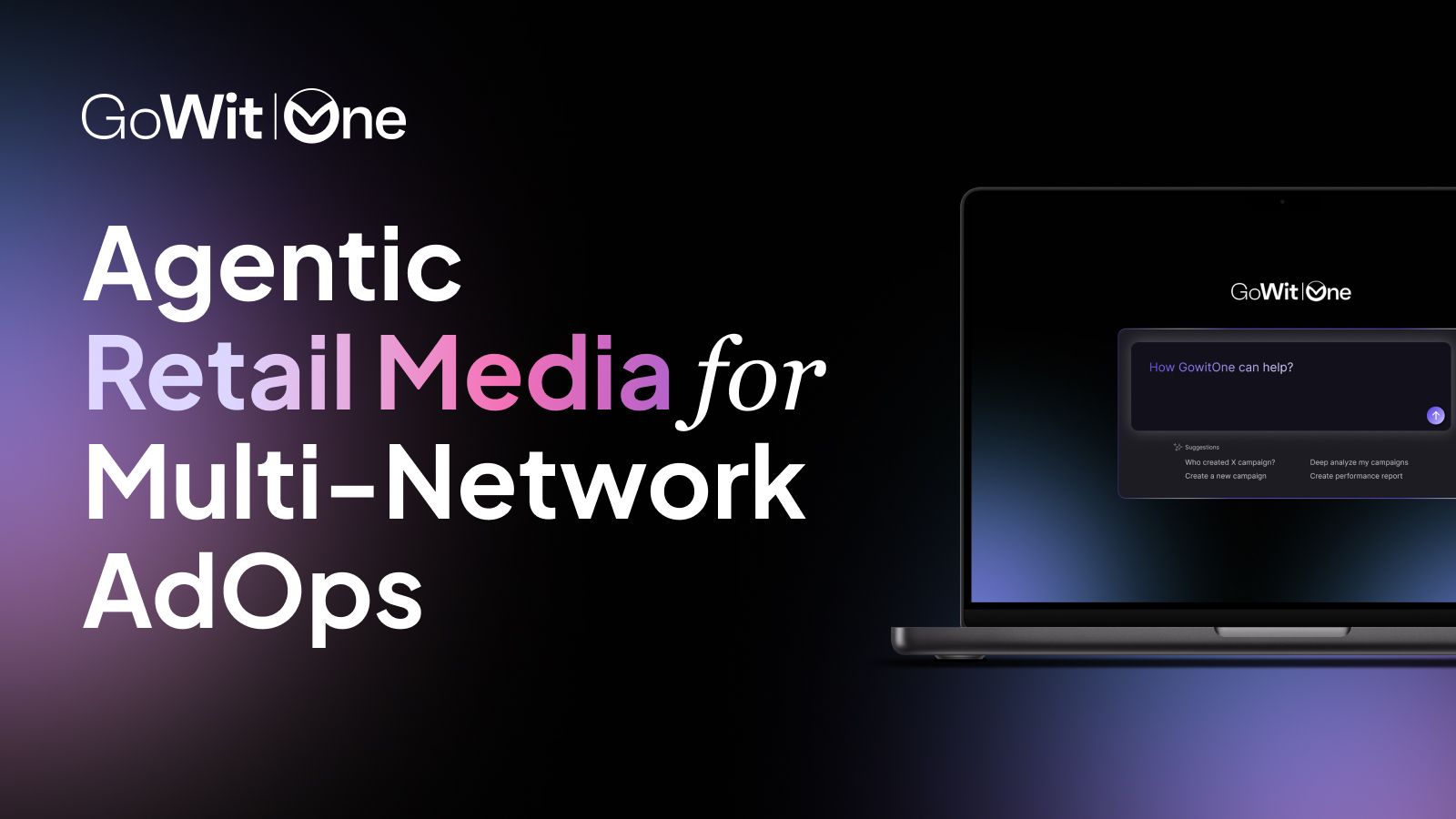
Platforms like GoWit One enable agencies to bring multiple retailer accounts and brand portfolios into a single environment while maintaining strict governance over access and actions.
Traceability for Better Transparency
Transparency becomes even more critical once AI begins influencing campaign decisions. Retail media budgets are often substantial, and agencies must be able to explain how and why certain changes occur. If an automated system increases bids, reallocates budget between retailers, or pauses a campaign, teams need a clear record of what happened and why. Without that visibility, automation can quickly erode trust between agencies, brands, and retail partners.
For this reason, traceability must be built directly into the operational infrastructure. Every action taken within the system, whether initiated by a human or an AI process, should generate a clear and accessible audit trail. This record allows teams to understand exactly when a change occurred, what triggered it, and how it affected campaign performance.
In the context of retail media, this level of transparency is particularly valuable. Agencies frequently need to explain performance changes to brand partners or justify how budgets were allocated across different retail networks. A comprehensive audit trail provides the operational clarity needed to maintain confidence in automated systems.
GoWit One: Built-In Audit Trails
GoWit One provides a comprehensive audit trail that records every operational action across the ecosystem. This means agencies can always answer:
- What changed
- When it changed
- Why it changed
- Who or what triggered the change
This transparency builds trust between agencies, brands, and retail partners.
Solving Retail Media’s Standardization Problem
Another major challenge in retail media operations is the lack of standardization across platforms. Each retailer defines its own campaign structures, reporting fields, naming conventions, and performance metrics. When agencies manage campaigns across many networks, these differences quickly create inconsistencies in reporting and data organization.
This lack of standardization becomes a major barrier to scale. If campaign naming conventions vary across networks, data consolidation becomes difficult. Reporting requires additional manual work, and comparing performance across retailers becomes less reliable.
Standardized Taxonomy in AI-First AdOps
AI systems perform best when data structures are consistent. That’s why AI-first AdOps environments must enforce standardized campaign taxonomies and UTMs. This ensures:
- Consistent reporting across retailers
- Clean performance comparisons
- Reliable data for AI optimization models
- Faster campaign launches
GoWit One automatically enforces tracking structures, ensuring that 100% of ad spend is organized and traceable.
What Agencies Should Automate First
Agencies don't need to automate every task immediately. The smartest approach is to focus on high-volume, low-strategic tasks that consume operational time. These are the areas where AI creates immediate efficiency without sacrificing control.
1. QA & Compliance Workflows
Retailers often reject campaigns due to creative or format issues. Automated QA systems can instantly verify:
- Creative specifications
- Retailer compliance rules
- Ad format requirements
This reduces delays and minimizes manual back-and-forth with retailers.
2. Budget Management
Managing campaign budgets across multiple retailers can be difficult for agencies when handled manually.
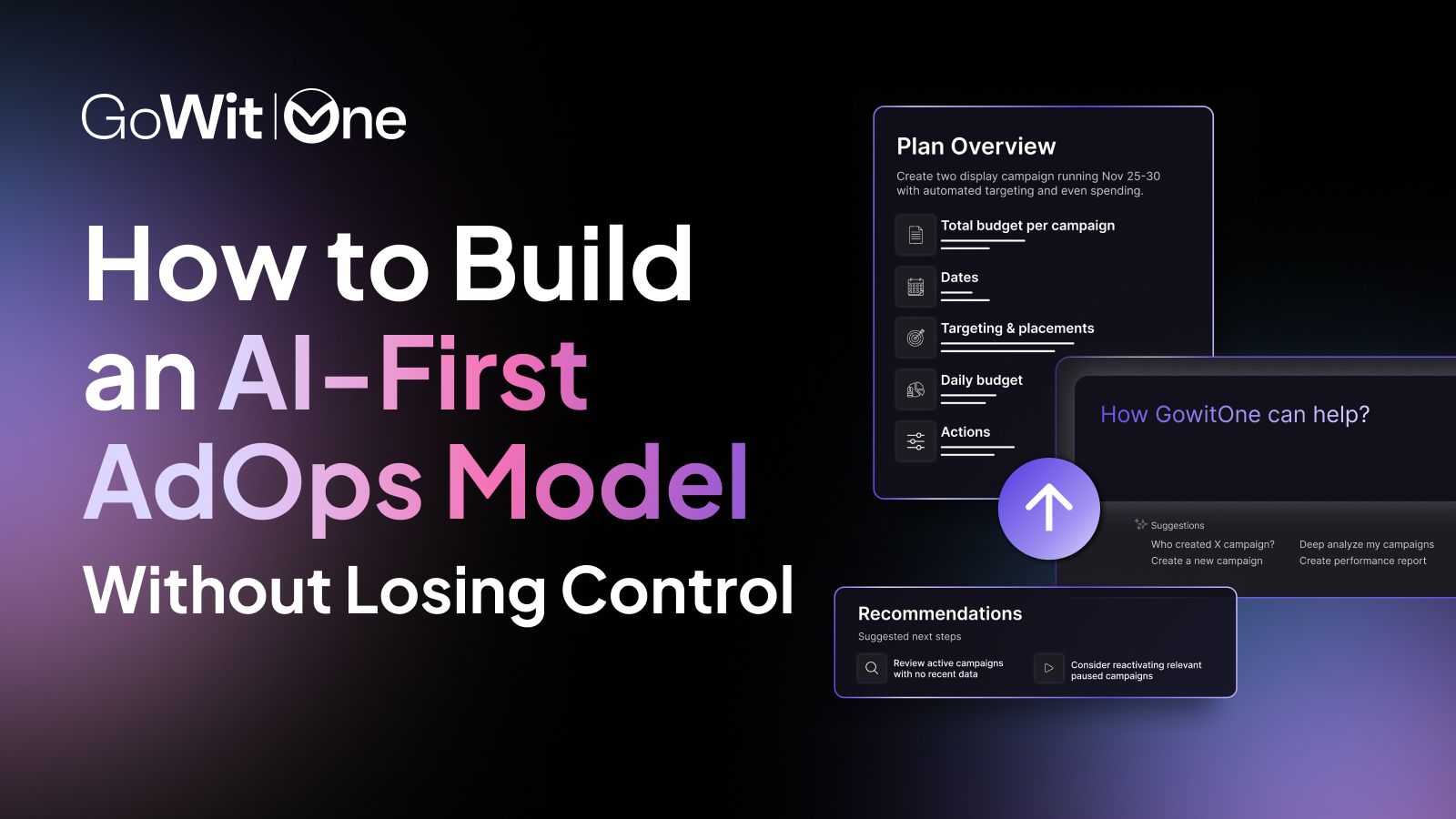
With GoWit One, AI-powered automation monitors campaign budgets, pacing rules, and performance across retailers within a single unified dashboard.
This allows agencies to track spend across networks, control budget pacing, and re-allocate budgets from low performing to high-performing ads.
3. Data Consolidation & Reporting
Retail media reporting is often the most time-consuming part of AdOps. Agencies must pull performance data from multiple retailer dashboards and combine them into reports. AI-first systems replace this with real-time performance consolidation.
Instead of managing spreadsheets, agencies gain:
• A single performance view across networks
• Automated reporting
• Real-time ROI insights
What This Means for Agencies
Retail media agencies are under increasing pressure to:
- Scale campaign execution
- Manage more retailers
- Deliver faster insights
- Maintain operational transparency
AI-powered AdOps systems make this scale possible, but only when designed with governance and control in mind.
By focusing on:
- Centralized account linking
- Granular permissions
- Full operational traceability
- Standardized taxonomies
- Automated compliance checks
- Consolidated reporting
Agencies can close the Retail Media Standardization Gap and operate at scale without losing oversight. The real goal of an AI-powered operating system isn’t replacing strategists. It’s creating an ecosystem where strategists spend:
0% of their time logging into multiple platforms
and
100% of their time driving retail media growth.
Ready to explore more and see GoWit One in action?
https://gowit.com/contact